This Self Stirring Mug Is Going Viral – Here’s Why!

Meet the Self Stirring Mug That’s Changing Coffee Time Forever

Introduction – The Mug That Stirs Itself!

Imagine never needing a spoon again—no more messy counters or half-mixed coffee. The new Self Stirring Mug has officially launched, and it’s turning heads. With sleek design and smart stirring technology, this mug is a game-changer for coffee lovers, tea addicts, hot chocolate fans, protein shake drinkers, and just about anyone who mixes drinks regularly.

Recently launched on CartSathi, this new arrival is already getting attention—and for good reason. With a 50% discount, it’s affordable, stylish, and super functional. The self stirring mug combines ease, innovation, and elegance into one must-have gadget.

Whether you’re rushing in the morning or settling down at your desk, this mug saves you time, effort, and hassle. It’s not just another mug—it’s the future of drinking.

What Is a Self Stirring Mug?

The self stirring mug is built with a compact motorized stirring mechanism located at the base of the cup. A press or twist activates the stirrer, instantly blending your beverage evenly.

Who Is It For?

  • Busy professionals who multitask

  • Fitness enthusiasts mixing protein shakes

  • Students cramming with caffeine

  • Office workers who love neat desks

  • Anyone tired of the spoon-stir-repeat cycle

How It Works?

Just pour your drink, seal the lid, and twist or press. The internal motor activates a stirring rod that blends your drink to perfection. It’s engineered for both hot and cold beverages. Great for:

  • Coffee & milk

  • Protein drinks

  • Matcha tea

  • Chocolate milk

  • Health tonics

Real-Life Use Cases

  • Morning Routine: Pour your coffee, hit stir, and you’re ready to go.

  • Work Desk: Keep your drink mixed without leaving your chair.

  • Gym Bag: Pre- or post-workout, this mug makes your shake prep fast.

  • Travel Buddy: Spill-proof design makes it perfect for car rides.

Launch Offer – Grab Yours at 50% Off!

CartSathi is offering this revolutionary self stirring mug at a launch discount of 50%. But hurry—stock is limited and demand is high.

👉 Buy Now from CartSathi

Conclusion – Stir Less, Live More

Gone are the days of spoon-stirring your morning brew. The self stirring mug is not just a product—it’s an experience. It simplifies your routine, adds a dash of style, and makes drinking fun.

Whether you’re gifting it or keeping it for yourself, this mug is worth every rupee. With its beautiful design, ease of use, and practicality, it’s no wonder people are buzzing about it.

🔥 Get it now while the launch offer lasts – 50% OFF on CartSathi!

Eric Trump for President? 5 Surprising Possibilities!

Could Eric Trump Outshine Don Jr? 4 Big Clues!

Introduction

Eric Trump’s recent remarks have ignited speculation about the Trump family’s next political move. In an interview with the Financial Times, Eric hinted that running for office would be “an easy one” for him, suggesting that a White House bid could be in the cards. This raises a compelling question: Is “Eric Trump for President” a serious possibility in 2028?

While Donald Trump remains a dominant force in the GOP, his children are gradually carving their own paths. Among them, Eric has remained relatively low-key compared to Don Jr. and Ivanka. Yet, his recent comments indicate that the spotlight may soon shift.

This article explores the political viability of Eric Trump, analyzes his motivations, and evaluates his chances in comparison with other Trump family members. With the keyword “Eric Trump for President” integrated naturally, let’s uncover what a future run might look like.

A Family Dynasty in Motion

Eric Trump’s assertion that politics would be an “easy path” suggests growing confidence. He acknowledged the toll politics has taken on the family, including massive legal expenses and intense scrutiny, but emphasized their collective resilience. The Trump brand, deeply entrenched in Republican politics, provides an inherent advantage if Eric decides to run.

He claimed the family hasn’t gained financially from politics, arguing instead that they’ve suffered losses. This narrative aims to humanize the Trumps, potentially reshaping public perception and reinforcing the theme of service over self-enrichment.

Public Persona and Potential Platform

Eric Trump, unlike his brother Don Jr., has maintained a more restrained public image. His strengths lie in business and organizational leadership, managing the Trump Organization alongside his brother. While he lacks political experience, his reputation for loyalty, discipline, and family-first values could resonate with conservative voters.

However, without a strong public speaking presence or defined policy positions, Eric would need to undergo a rapid political evolution. Public debates, campaign rallies, and policy discussions demand charisma and clarity—skills Eric must hone if he’s serious about a presidential run.

Don Jr. vs. Eric: A Family Face-Off?

Donald Trump Jr. has already signaled his political ambitions. His social media following, energetic persona, and alignment with MAGA ideologies give him a strong foundation. A potential sibling rivalry could split conservative support, depending on how each presents their vision for America.

While Don Jr. is outspoken and provocative, Eric’s quieter approach might appeal to voters tired of political drama. This contrast could work in Eric’s favor, positioning him as a more thoughtful and strategic leader.

Challenges Ahead

Should Eric decide to run in 2028, he must address several critical challenges:

  • Build a political team and infrastructure from the ground up.
  • Create a compelling policy platform that extends beyond the Trump brand.
  • Engage with media, voters, and donors consistently.
  • Handle legal and reputational issues linked to ongoing family investigations.

Eric’s candid admission about the sacrifices involved in politics suggests he’s not rushing into a decision. Yet, his confidence indicates he’s keeping the door open.

Conclusion

“Eric Trump for President” may sound speculative today, but the signs are increasingly visible. His statement that politics would be “an easy one” hints at preparation, even if unofficial. Whether he’s testing public reaction or genuinely planning a run, the discussion is now public.

With the Trump legacy in flux, Eric could step forward as the next family torchbearer—provided he addresses his political inexperience and shapes a distinct identity. The 2028 race might still be years away, but for Eric Trump, the campaign of perception has already begun.

Would you support a fresh Trump in the race, or are Americans ready for new names on the ballot?

Also Read:

Zuckerberg Reveals Instagram’s Key Advantage Over Facebook

99‑Year‑Old Parsi Eatery Closes—What Happened?

Mumbai’s 99‑Year‑Old Parsi Eatery Closes Just Before 100th Anniversary

Introduction

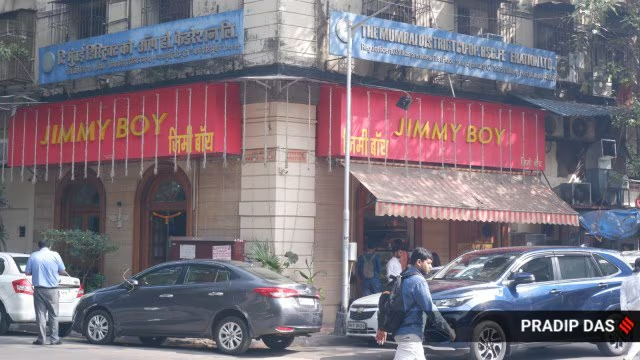
In June 2025, Mumbai’s food lovers woke to a bitter taste—the beloved Parsi restaurant Jimmy Boy shut down just before hitting its 100th anniversary. Nestled in the heart of South Mumbai, Jimmy Boy wasn’t just a place for food—it was a cultural symbol, a historical gem, and an emotional anchor for generations of Mumbaikars.

Its sudden closure is a sobering reminder of how fragile cultural heritage can be. Amid real estate pressures, rising costs, and dwindling support, even century-old legacies are no longer immune.

This post pays tribute to the rise and fall of Jimmy Boy—highlighting what it meant to the Parsi community, how it impacted Mumbai’s culinary identity, and what its loss says about our changing city.

The Rise of Parsi Eateries in Mumbai

From Persia to the Bombay Plate
In the late 1800s, Parsi immigrants from Persia brought with them a unique culinary heritage that found a natural home in Mumbai. The Irani cafés they set up became cultural hotspots—places that married affordable eats with welcoming spaces.

Jimmy Boy: A Century of Flavor Cut Short

What Made Jimmy Boy Special
Jimmy Boy served Parsi classics—berry pulao, sali boti, caramel custard—crafted with age-old recipes passed down generations. It wasn’t just food; it was time travel on a plate.

Why Did It Shut?
The immediate reason: the building was declared structurally unsafe. But the deeper issues? Real estate pressure, declining Parsi patronage, and increasing regulatory burdens.

Key Challenges for Parsi Cafés Today

Red Tape & Building Compliance
Old structures require upgrades that demand massive investments—often beyond the means of small heritage eateries.

Changing Demographics
As the Parsi community shrinks and younger generations migrate, patronage is drying up.

Real Estate Squeeze
Prime locations now come with sky-high rents, making it unviable for traditional eateries to operate profitably.

Why Jimmy Boy’s Closure Hurts Mumbai

Jimmy Boy was more than a restaurant—it was part of the city’s soul. Every shuttered café is a lost chapter of Mumbai’s cultural diary. Only a handful of Parsi cafés now survive. Will they endure, or will they fade into memory like Jimmy Boy?

Conclusion

Jimmy Boy’s closure before its centenary serves as a cultural wake-up call. It’s a story of more than economic strain—it’s about memory, identity, and the relentless pace of urban change.

Preserving Mumbai’s Parsi eateries requires effort—from heritage grants to community support to just choosing these cafés over trendier joints. Let’s not wait for another one to close before we realize what we’re losing.

Share your memories of Parsi cafés. Support them. Eat there. Talk about them. Keep them alive.

Also Read:

Mumbai Gets Its First Amrit Bharat Express to Ayodhya

Mumbai Gets Its First Amrit Bharat Express Train Service

Introduction

In a significant boost to Mumbai’s rail infrastructure and connectivity, the city has received its first Amrit Bharat Express train, marking another milestone in Indian Railways’ modernization initiative. The inaugural run of this new-age train is part of a broader effort to enhance comfort, accessibility, and speed for passengers, especially on key intercity routes.

The launch aligns with the central government’s ‘Amrit Bharat Station Scheme’, which aims to modernize the country’s rail network with upgraded facilities and streamlined operations. With Mumbai being a crucial hub for both long-distance and suburban travel, the introduction of this train is seen as a meaningful step toward upgraded mobility for the masses.

What Is the Amrit Bharat Express?

The Amrit Bharat Express is a new category of semi-high-speed trains developed by Indian Railways. Designed to cater to the needs of middle-class and long-distance travelers, it prioritizes:

  • Speed and punctuality
  • Affordable comfort
  • Modern amenities
  • Improved safety features

Unlike premium trains like Vande Bharat, the Amrit Bharat Express targets a broader audience with budget-friendly fares and optimized travel experience.

Mumbai’s First Route

The inaugural Mumbai-bound Amrit Bharat Express will run between Mumbai and Ayodhya, connecting two major cultural and religious centers. This move not only enhances religious tourism but also streamlines travel for pilgrims and daily passengers.

Key Route Highlights:

  • Will pass through major stations including Nashik, Bhopal, and Lucknow
  • Operates with LHB coaches known for higher safety standards
  • Equipped with bio-toilets, CCTV surveillance, modern lighting, and USB charging ports

Passenger Amenities and Design

Indian Railways has ensured that Amrit Bharat trains are outfitted with:

  • Wider doors and entry points for accessibility
  • Comfortable seating and sleeping arrangements
  • Improved onboard sanitation and water availability
  • Modern coach interiors with aesthetic design

The coaches are designed keeping in mind both urban comfort and rural accessibility, ensuring a well-rounded experience for all types of travelers.

Why It Matters for Mumbai

Connectivity

Mumbai is a hub of commerce, culture, and migration. Connecting it via improved rail services to Northern India is both an economic and social enabler.

Decongesting Premium Trains

By offering a more affordable yet comfortable alternative, the Amrit Bharat Express helps reduce pressure on Rajdhani and Vande Bharat trains, catering to passengers priced out of high-end services.

Symbol of Rail Modernization

The arrival of this train reflects the government’s commitment to infrastructure overhaul and improved multimodal connectivity.

Government’s Broader Vision

The Amrit Bharat Express is part of Indian Railways’ ambitious plans to:

  • Modernize 1,309 stations under the Amrit Bharat Station Scheme
  • Introduce more semi-high-speed trains to promote regional connectivity
  • Reduce carbon emissions through electrification and energy-efficient designs

This vision is part of a national strategy to transition from volume-based transportation to value-based, user-centric mobility.

Future Prospects

Following the successful launch of Mumbai’s first Amrit Bharat Express, Indian Railways is expected to:

  • Expand the service to other major metros like Chennai, Kolkata, and Bengaluru
  • Introduce dedicated women’s coaches, pantry cars, and potentially Wi-Fi-enabled coaches in future iterations
  • Offer improved reservation systems and app-based tracking

Conclusion

The launch of the Amrit Bharat Express in Mumbai signifies more than just a new train service—it embodies a shift in how India views and experiences rail travel. By marrying speed with accessibility and affordability with modernization, Indian Railways is crafting a future-ready transport ecosystem.

As the train gains traction among commuters and pilgrims alike, it may set the tone for India’s next phase of inclusive railway development.


Dont Miss Out:

Dwarka Expressway Emerges as a Key Realty Hub in India


Dwarka Expressway Emerges as a Key Realty Hub in India

Dwarka Expressway Emerges as a Key Realty Hub in India

Introduction

The Dwarka Expressway, once just another infrastructure project on paper, has now evolved into one of India’s most sought-after real estate corridors. Stretching between Delhi and Gurugram, the expressway has emerged as a critical connectivity link and a magnet for residential and commercial investments.

Fueled by improved infrastructure, proximity to the Indira Gandhi International Airport, and strategic location linking Delhi with fast-developing areas of Gurugram, the Dwarka Expressway has become a hotbed for real estate growth, urban migration, and developer interest.

A Timeline of Transformation

Initial Development

  • First proposed in the early 2000s, the Dwarka Expressway faced several delays due to land acquisition and litigation.
  • After years of roadblocks, construction gained momentum around 2018–2019.

Inauguration and Current Status

  • As of 2024, the expressway is largely operational, with the final stretches being completed.
  • It connects Dwarka (Delhi) to Kherki Daula (Gurugram) over a stretch of 29 kilometers.

What Makes Dwarka Expressway a Realty Hotspot?

Seamless Connectivity

  • Direct link between Delhi, Gurugram, and Manesar.
  • Proximity to IGI Airport and upcoming India International Convention Centre.
  • Upcoming Metro extension promises enhanced last-mile connectivity.

Planned Urban Ecosystem

  • The area is being developed with wider roads, green belts, commercial zones, and high-rise residential clusters.
  • Smart city elements, including rainwater harvesting, LED lighting, and underground utilities, are being integrated.

Residential and Commercial Boom

  • Major developers like DLF, Godrej, TATA Housing, ATS, and Shapoorji Pallonji have launched projects.
  • Properties range from mid-income to luxury housing, with average prices appreciating by 15–25% in the last two years.
  • The commercial segment, including retail and office space, is witnessing heightened demand due to population inflow.

Who’s Investing?

End-Users and NRI Buyers

  • Many Delhi-based families are relocating for better infrastructure and lifestyle.
  • NRI investors are considering this corridor due to rental yields and long-term value.

Corporate and IT Professionals

  • Close proximity to Cyber City, Udyog Vihar, and other commercial hubs makes it ideal for working professionals.
  • Co-living and co-working spaces are on the rise to cater to the growing millennial population.

Infrastructure Drivers

High-Speed Rail and Metro Expansion

  • The RRTS (Regional Rapid Transit System) and Dwarka Metro extension will further integrate this corridor into Delhi-NCR’s larger transport network.

Social Infrastructure

  • New schools, hospitals, malls, and entertainment hubs are emerging in the vicinity.
  • Emphasis on sustainable development, green spaces, and clean urban planning is boosting liveability.

Challenges to Watch

Regulatory Hurdles

  • Some land acquisition and construction clearances are still pending in a few zones.
  • Unified governance between Delhi and Haryana remains a challenge in some civic matters.

Affordability Factor

  • Rapid price rise is pushing certain segments beyond the reach of middle-income buyers.
  • Speculative investment may create artificial pricing bubbles if not regulated.

Future Outlook

Real estate experts predict that Dwarka Expressway will become the next Gurugram-like urban cluster, blending the best of city and suburban living. With improved transit, developer interest, and rising livability, the area is likely to remain a prime real estate destination for the next decade.


Dont Miss Out:

India Crosses 20 Lakh EV Sales in FY2025—A Clean Mobility Breakthrough

13 Uttarakhand Villages to Be Taught Sanskrit: What Is the Scheme and Why It Matters

13 Uttarakhand Villages to Be Taught Sanskrit: What Is the Scheme and Why It Matters

Introduction

In a move blending heritage preservation with cultural education, the government has announced a unique initiative to teach Sanskrit in 13 villages. These villages have been identified for their historical and cultural ties to India’s ancient language, and the program aims to revitalize Sanskrit as a living language rather than just a relic of religious texts.

The scheme, part of a broader cultural rejuvenation effort, has sparked both praise and debate. Proponents see it as a step toward reconnecting with India’s linguistic roots, while critics question the practicality of promoting a language that has limited modern use.

So, what exactly does the scheme involve? Why has Uttarakhand taken this step? And what implications does it hold for education, tradition, and linguistic diversity?

What Is the Sanskrit Village Scheme?

Objective

The program’s central goal is to revive and normalize the use of Sanskrit in everyday life. By transforming select villages into hubs of Sanskrit communication, the government hopes to preserve the language through immersion-based learning.

Implementation

  • The 13 chosen villages span districts like Chamoli, Rudraprayag, and Uttarkashi, known for their deep spiritual and Vedic history.
  • Local schools will be equipped with Sanskrit-trained teachers, and villagers will be encouraged to use Sanskrit in routine conversations.
  • Signboards, public notices, and village meetings will incorporate Sanskrit terminology.
  • Workshops and Sanskrit camps will be organized to make learning interactive and community-oriented.

Administrative Support

The initiative is being led by the Sanskrit Education Department and supported by the Uttarakhand Sanskrit Academy.

Why These Villages?

Cultural and Historical Relevance

Many of these villages are located near pilgrimage routes like Kedarnath and Badrinath, areas steeped in Vedic traditions.

  • Some have existing traditions of Sanskrit chants, shloka recitation, and temple rituals.
  • There’s a visible enthusiasm among elders to pass down oral traditions to younger generations.

By leveraging these existing links, the program aims to anchor the revival effort in cultural familiarity rather than impose it externally.

Pilot for a Larger Plan

These villages will serve as model Sanskrit villages that could be replicated elsewhere in the state or country depending on the program’s success.

The Broader Vision

National Education Policy (NEP) 2020 Alignment

The move aligns with the NEP’s emphasis on Indian knowledge systems, classical languages, and multilingual education.

  • Sanskrit is recognized as a valuable tool for accessing vast ancient Indian literature across fields like philosophy, mathematics, astronomy, and medicine.
  • NEP promotes flexibility in language learning, allowing regional and classical languages to flourish.

Preserving India’s Linguistic Heritage

India is home to hundreds of languages and dialects, many of which are endangered. Promoting Sanskrit, despite its perceived elitism, is part of a wider attempt to ensure that heritage languages don’t fade into irrelevance.

Benefits of Teaching Sanskrit

Educational Enrichment

  • Sanskrit improves understanding of grammar, etymology, and cognitive structure.
  • It is considered mathematically precise and enhances language learning skills in students.

Cultural Confidence

  • Familiarity with ancient texts fosters pride in cultural heritage.
  • Helps connect youth with India’s civilizational legacy.

Spiritual and Religious Literacy

  • Many Hindu rituals and scriptures are in Sanskrit; learning the language improves access and interpretation.

Criticism and Concerns

Practicality

  • Critics argue that the focus on Sanskrit may come at the cost of teaching employability-oriented languages like English or computer literacy.
  • Concerns about resource allocation and availability of trained teachers in remote villages persist.

Elitism Debate

  • There are fears that Sanskrit promotion may reinforce social hierarchies, given its historical association with upper castes.
  • However, the government asserts that the scheme is inclusive and voluntary.

Usage Gap

  • Unlike regional languages, Sanskrit is not used in mainstream media, commerce, or government, limiting its day-to-day utility.

Conclusion: Preserving the Past, Building a Bridge to the Future

The Uttarakhand government’s Sanskrit village scheme is a bold attempt to blend cultural conservation with modern education policy. While there are challenges around implementation and relevance, the program highlights a national yearning to reconnect with India’s classical heritage.

If successful, these 13 villages could become living classrooms, where the ancient meets the contemporary—not just in scriptures, but in conversations.


Tesla Looks to Saudi Arabia for Growth Amid Domestic Sales Challenges

Tesla Eyes Saudi Arabia for Growth Amid Slowing U.S. Sales

Introduction

Facing plateauing demand and intensified competition in the domestic market, Tesla is reportedly setting its sights on Saudi Arabia as a strategic growth market. The electric vehicle (EV) pioneer, led by Elon Musk, is actively exploring options to expand its operations and footprint in the Middle East, with Saudi Arabia emerging as a key player in Tesla’s global vision.

This move comes at a crucial time as Tesla deals with challenges in North America, including declining EV incentives, pricing pressure, and rising competition from both legacy automakers and new-age startups. Meanwhile, Saudi Arabia, under its Vision 2030 transformation plan, is aggressively investing in renewable energy, green mobility, and technology—making it a natural match for Tesla’s ambitions.

Here’s how Tesla’s pivot toward the Gulf nation could play out and reshape the future of EVs in the region.

U.S. Market Challenges Push Global Expansion

Slowing Sales in North America

  • Tesla’s U.S. sales have witnessed a year-over-year slowdown despite multiple price cuts.
  • A saturation in urban EV markets and reduced federal EV tax credits have impacted demand.
  • Increased competition from Ford, GM, Hyundai, and emerging EV players is squeezing Tesla’s market share.

Production vs. Demand Imbalance

  • Tesla continues to ramp up production capacity at its Gigafactories in Texas and California.
  • However, inventory build-up and declining order backlogs have signaled the need to tap into new consumer bases globally.

Why Saudi Arabia Makes Sense for Tesla

Vision 2030 and Green Initiatives

  • Saudi Arabia is investing billions into becoming a hub for clean energy and smart mobility.
  • The country plans to transition to 30% electric vehicle adoption in Riyadh by 2030.
  • Initiatives such as NEOM and The Line aim to be powered by 100% renewable energy, creating a fertile ground for EV adoption.

EV Infrastructure Push

  • The Kingdom is rapidly building EV charging networks, manufacturing parks, and battery supply chains.
  • Saudi Arabia has already invested in Lucid Motors and is actively pursuing EV partnerships globally.

Financial Backing and State Support

  • With support from the Public Investment Fund (PIF), Tesla could receive favorable investment terms, subsidies, and regulatory backing.
  • Discussions may involve local assembly or a Gigafactory, similar to Tesla’s model in China and Germany.

Competitive Dynamics

Rivals in the Region

  • Tesla would face competition from Lucid Motors, which has a manufacturing plant in King Abdullah Economic City.
  • Chinese EV giants like BYD and Nio are also eyeing the Gulf region, making early entry critical for Tesla.

Brand Appeal

  • Tesla remains a prestige brand with global recognition, and its entry could catalyze consumer demand and push EV adoption among affluent Saudi buyers.

Potential Hurdles

Political Sensitivities

  • Tesla’s relationship with Saudi Arabia could come under scrutiny due to past tensions between Elon Musk and the PIF.
  • Ethical concerns about human rights and freedom of expression in the Kingdom may attract criticism in Western media.

Supply Chain and Localization

  • Tesla would need to navigate local content requirements and develop supplier ecosystems in the region.
  • Logistics and training of a specialized EV workforce may pose initial challenges.

Strategic Benefits for Tesla

Diversified Growth Engine

  • Saudi Arabia offers Tesla an opportunity to reduce its overreliance on Western markets.
  • It could serve as a launchpad for wider Middle East and North Africa (MENA) expansion.

Government Collaboration

  • Collaboration with a government actively investing in sustainability could enable pilot projects, green mobility pilots, and EV fleet adoption by state departments.

Technological Alignment

  • Tesla’s solar and battery storage businesses also align with Saudi Arabia’s renewable energy goals, offering multi-vertical expansion beyond EVs.

Conclusion

As Tesla searches for new avenues to sustain its growth, Saudi Arabia appears to be a compelling next chapter. With aligned strategic goals, abundant capital, and a fast-growing appetite for green technology, the Kingdom offers not just a market—but a partner in innovation.

If Tesla navigates the geopolitical and operational complexities effectively, its Saudi expansion could redefine its global strategy and reinforce its dominance in the EV race.

Putin Expresses Readiness for Direct Peace Talks with Ukraine After Years of Silence

Putin Expresses Readiness for Direct Peace Talks with Ukraine After Years of Silence

Introduction

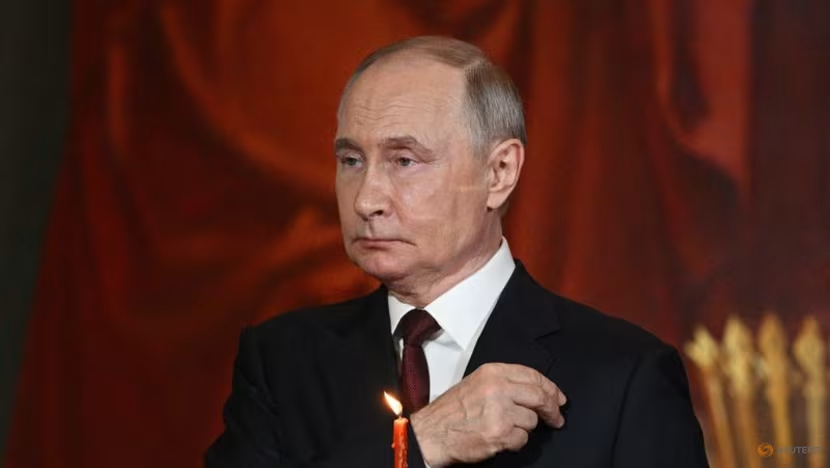
In a significant shift in diplomatic tone, Russian President Vladimir Putin has stated that he is open to direct peace talks with Ukraine, marking the first such indication in years. The announcement has sparked a mix of cautious optimism and skepticism among international observers and policymakers.

Putin’s remarks come amid a prolonged and devastating conflict that has displaced millions, strained global economies, and fundamentally altered the geopolitical landscape since the war began in February 2022. While previous peace initiatives have stalled or collapsed, the possibility of fresh negotiations—especially with a direct approach—offers a glimmer of hope for de-escalation.

What Did Putin Say?

In a televised speech, Putin declared that Russia is ready for “serious and constructive dialogue” with Ukrainian authorities. He emphasized that the goal is to end hostilities, not escalate them further.

“We are not against negotiations. We have always said we are open to discussions that respect Russia’s core security interests,” Putin said.

He also suggested that previous efforts failed due to Western interference and Ukraine’s unwillingness to recognize Russia’s territorial claims, especially regarding Crimea and regions of eastern Ukraine.

Why This Matters Now

War Fatigue and Domestic Pressures

  • Russia has faced significant losses and domestic discontent is reportedly rising.
  • Western sanctions have taken a toll on the Russian economy, pushing Moscow to re-evaluate its long-term war strategy.

Shifting Battlefield Dynamics

  • Ukrainian forces, backed by NATO intelligence and weaponry, have maintained resistance, even regaining some territory.
  • A military stalemate appears to be setting in, making diplomacy a more attractive option for both sides.

Global Impact

  • With continued pressure from global south nations and European allies facing energy crises, the demand for a ceasefire or diplomatic breakthrough has grown stronger.

Ukraine’s Response: Cautious and Firm

The Ukrainian government has not yet formally responded to Putin’s offer, but early signals suggest deep skepticism. President Volodymyr Zelenskyy has repeatedly insisted that any negotiation must include:

  • Full withdrawal of Russian forces from Ukrainian territory
  • Restoration of Ukraine’s sovereignty, including Crimea
  • Accountability for war crimes committed during the invasion

Ukrainian officials believe that previous Russian offers were tactical delays rather than genuine diplomatic outreach.

International Reaction

NATO and Western Allies

  • NATO Secretary-General Jens Stoltenberg called for verification of Russia’s intentions before engaging in talks.
  • The U.S. and EU remain cautious, stressing that any negotiations must be led by Ukraine and not imposed externally.

China and the Global South

  • China, which has positioned itself as a potential mediator, welcomed the move and urged both nations to meet.
  • India and Brazil also expressed support for “dialogue without preconditions.”

Past Peace Efforts: A Rocky History

This is not the first time peace talks have been discussed:

  • Istanbul Talks (2022): Initial discussions faltered due to lack of trust and increasing battlefield aggression.
  • Minsk Agreements: Earlier attempts to stabilize the Donbas region had already collapsed well before the 2022 invasion.

These failed precedents have made both sides wary of resuming talks without clear guarantees.

What Could Come Next?

1. Backchannel Diplomacy

  • Third-party nations like Turkey, China, or Switzerland may initiate secret negotiations to test the waters.

2. Conditional Ceasefire

  • A temporary truce could be proposed to allow humanitarian relief and prisoner swaps.

3. Multilateral Summit

  • The UN or G20 could host a summit to mediate initial terms for future formal negotiations.

Conclusion: A Ray of Hope or Strategic Posturing?

Putin’s announcement marks a noteworthy rhetorical pivot, but whether it translates into meaningful progress remains to be seen. With trust between the two nations at historic lows, actions will speak louder than words.

As global attention turns once again to the possibility of peace, the world waits to see whether this gesture marks the start of a new chapter—or yet another diplomatic mirage in a long and painful war.

Aman Gupta’s Reality Check Amid BluSmart Crisis: “Jo Bhi Karo Dil Se Karo”

Aman Gupta’s Reality Check Amid BluSmart Crisis: “Jo Bhi Karo Dil Se Karo”

Introduction

Aman Gupta startup advice, BluSmart crisis, Shark Tank India quotes, Aman Gupta viral tweet, Indian startups funding, BluSmart layoffs, startup hype vs reality, boAt founder statement, India startup winter, founder mindset, VC investment India, Aman Gupta entrepreneur tips, building with passion, startup sustainability, BluSmart controversy

As India’s startup ecosystem grapples with funding winter and operational hurdles, Shark Tank India’s Aman Gupta has offered a timely reality check to aspiring entrepreneurs. Speaking in the wake of BluSmart’s reported crisis, the boAt co-founder urged startup founders to build with passion and resilience—underscoring the importance of sincerity over hype.

BluSmart, one of India’s most ambitious electric vehicle (EV) ride-hailing platforms, has recently been in the spotlight over layoffs, delayed salaries, and a funding crunch. Gupta’s message didn’t directly name the startup but clearly resonated with the ongoing challenges faced by many new-age ventures.

Here’s a breakdown of Aman Gupta’s message, the context behind it, and what it means for India’s ever-evolving startup landscape.

Aman Gupta’s Message

In a widely shared post on X (formerly Twitter), Aman Gupta wrote:

“Jo bhi karo, dil se karo. Investors ka paisa lena, media mein dikhna, aur PR karna asaan hota hai. But real game hai ground pe ladna.”

Translation: Whatever you do, do it with heart. Taking investor money, getting media coverage, and doing PR is easy. The real game is fought on the ground.

The statement quickly went viral, sparking debates among founders, VCs, and the broader startup community.

The BluSmart Backdrop

What’s Happening with BluSmart?

  • BluSmart, once hailed as a promising EV alternative to Ola and Uber, is reportedly struggling with financial stability.
  • Reports indicate:
    • Layoffs affecting over 100 employees
    • Delayed or unpaid salaries across departments
    • Difficulty in raising new capital despite prior successful rounds

Strategic Missteps?

  • Critics cite aggressive expansion and high operational costs as key issues.
  • Others believe the lack of strong unit economics and over-dependence on subsidies hurt scalability.

Why Aman’s Message Resonates

No-Filter Reality Check

In an ecosystem where valuation often trumps value, Gupta’s message strikes at the heart of what’s broken:

  • Founders focusing more on media optics than product-market fit
  • Lavish spending without sustainable revenue
  • PR-driven growth that doesn’t match on-ground traction

Credibility Factor

As co-founder of boAt, a brand that has bootstrapped and thrived in a competitive market, Aman Gupta brings authenticity to the table. His words carry weight among budding founders and seasoned entrepreneurs alike.

Reactions from the Ecosystem

Founders

  • Some lauded Gupta’s honesty, saying more influential voices should call out startup vanity.
  • Others questioned whether such comments help when many are battling real-world pressures.

Investors

  • VCs echoed the sentiment, calling for a return to business fundamentals over hype cycles.
  • Angel investors suggested that Gupta’s statement could reset expectations among early-stage founders.

Twitter/X Users

  • Hashtags like #StartupIndia, #AmanGupta, and #RealityCheck began trending
  • Memes, quotes, and personal anecdotes flooded social media platforms

Lessons for Indian Startups

1. Grounded Growth > Glamour

PR without product-market fit is short-lived. Focus on customer needs, not vanity metrics.

2. Financial Discipline

Spend wisely, especially when capital is scarce. Frugality isn’t weakness—it’s strategy.

3. Culture of Accountability

Entrepreneurs should prioritize team welfare, operational sustainability, and long-term impact.

Conclusion

Aman Gupta’s blunt advice lands as a wake-up call for India’s startup ecosystem, especially at a time when many unicorns are revisiting valuations, cutting costs, and restructuring operations. His message—though simple—urges entrepreneurs to realign their priorities.

In a country that celebrates innovation and hustle, the true test lies not in the headlines but in what’s built with grit and heart. As BluSmart and others navigate tough terrain, Gupta’s words may serve as both a caution and a compass.


Raj Thackeray asks MNS leaders not to speak about reconciliation with Uddhav

Raj Thackeray Warns MNS Leaders Against Reconciliation Talks with Uddhav Thackeray

Introduction

In a strong directive that reflects the deep-rooted political rift within the Thackeray family, Maharashtra Navnirman Sena (MNS) chief Raj Thackeray has reportedly asked his party leaders to refrain from making any statements about a possible reunion or reconciliation with Uddhav Thackeray, leader of the Shiv Sena (UBT). This announcement comes amid rumors and media buzz about a potential thaw in the strained relationship between the two political cousins ahead of the upcoming Lok Sabha elections.

Raj Thackeray’s caution has put a full stop to any speculation of a possible alliance, underscoring the continued divide between the two factions, which have taken divergent ideological and political paths over the past decade.

What Triggered the Statement?

Growing Speculation

  • In recent weeks, there were growing murmurs in political and media circles about a potential rapprochement between MNS and Shiv Sena (UBT), especially with the shifting alliances ahead of the 2024 general elections.
  • A few MNS leaders made public remarks hinting at the possibility of the two Thackerays joining forces to strengthen the Marathi manoos vote base.

Raj Thackeray’s Reaction

  • During a closed-door meeting with party functionaries, Raj categorically said that no one in the party should comment publicly about patching up with Uddhav.
  • He reportedly added, “There is no question of reconciliation. We have our own path.”

The History of the Thackeray Rift

Origins of the Split

  • Raj Thackeray broke away from the Shiv Sena in 2006 after a leadership tussle and ideological differences with Uddhav.
  • He formed the MNS with a focus on Marathi pride and regional issues, while Uddhav transitioned the Shiv Sena into a broader Hindutva-led party.

Political Evolution

  • While Shiv Sena under Uddhav formed alliances with the Congress and NCP, MNS remained an independent force, occasionally aligning with the BJP.
  • The ideological divergence became more pronounced after Uddhav became Chief Minister in 2019 with support from secular parties.

Why This Matters Now

2024 Elections

  • As Maharashtra gears up for the general elections, vote-splitting among Marathi parties is a critical issue.
  • Any form of unity between Uddhav and Raj could pose a formidable challenge to the BJP-led NDA and the Congress-led INDIA bloc.

Political Identity at Stake

  • Raj’s refusal to consider reconciliation also reflects his effort to preserve MNS’s distinct identity, especially among younger, urban Marathi voters.
  • Aligning with Uddhav, who has shifted away from hardline Hindutva, could dilute the MNS brand.

Public and Political Reactions

  • Political analysts believe that this statement may temporarily end speculation, but behind-the-scenes dialogue may still be ongoing.
  • Uddhav Thackeray has so far maintained silence on the matter.
  • BJP leaders have welcomed Raj’s statement, as it reduces the threat of a consolidated opposition.

Social Media and Media Coverage

  • The announcement has stirred discussion across social platforms, with many expressing disappointment over the lost opportunity for Marathi unity.
  • Hashtags like #RajThackeray, #MNS, and #ThackerayFamilyFeud began trending shortly after the news broke.

Conclusion: Rift Far From Over

Raj Thackeray’s clear stand against reconciliation signals that personal and political wounds still run deep. Despite shared family history and a common political legacy, both Raj and Uddhav seem intent on carving out separate futures.

As Maharashtra politics continues to evolve rapidly, alliances may shift, but for now, the Thackeray cousins remain on opposite sides of the ideological battlefield.

Stay informed, stay ahead

Exit mobile version